
A soda, packaged whole-grain bread, and a protein bar can all be labeled ultra-processed. That doesn’t make the evidence against UPF-heavy diets meaningless. It does mean the label tells only part of the story.
Put three foods on a kitchen counter: a bottle of soda, a loaf of packaged whole-grain bread, and a protein bar.
Nutritionally, they can be very different. One may deliver mostly added sugar. Another may provide whole grains and fiber. The third might offer protein in a form that is easy to carry when a regular meal isn’t practical.
Yet all three can qualify as ultra-processed foods, or UPFs.
That is the tension at the heart of one of nutrition’s biggest debates.
Large studies repeatedly find that people who eat more ultra-processed food have higher rates of several health problems, including type 2 diabetes and cardiovascular disease. A major 2024 umbrella review covering nearly 10 million participants found associations across numerous health outcomes, although the strength and certainty of the evidence varied considerably.
But ultra-processed food is not one food. It is a huge category containing products with different nutrients, textures, ingredients, purposes, and effects on the way we eat. When researchers separate UPFs into subgroups, some appear more strongly associated with disease than others—and some show neutral or even inverse associations.
So the real question is no longer simply, “Are ultra-processed foods bad?”
It is: What is the UPF label actually detecting?
First, “Processed” and “Ultra-Processed” Aren’t the Same Thing
Most research behind the UPF debate uses a classification system called NOVA, which groups foods according to the nature, extent, and purpose of their processing.
At one end are unprocessed or minimally processed foods such as fruits, vegetables, grains, eggs, milk, and fresh meat. These foods may still be washed, chilled, frozen, ground, or pasteurized.
Another group includes culinary ingredients such as oils, sugar, and salt. A third includes processed foods made by combining foods with these ingredients, such as some cheeses, canned vegetables, and relatively simple breads.
Ultra-processed foods make up the fourth group. They are generally industrial formulations that may contain food-derived substances and additives used to change flavor, texture, appearance, shelf life, or other properties.
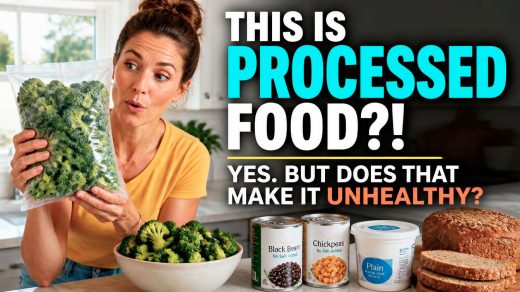
That distinction matters because processing itself is not inherently unhealthy.
Frozen berries are processed. Milk is pasteurized. Beans are canned. Vegetables are cooked.
None automatically becomes ultra-processed.
Even a food’s name may not settle the question. One loaf of bread might have a relatively simple formulation and fall into the processed category; another industrial bread containing additional ingredients may qualify as ultra-processed.
NOVA therefore captures something a standard nutrition label does not: information about how a food was formulated and produced.
But classification is only the first step.
It cannot, by itself, tell us what that food will do to health.
The Health Signal Is Hard to Dismiss
Whatever the limitations of the category, the epidemiological pattern deserves attention.
A 2024 BMJ umbrella review examined 45 pooled analyses involving nearly 9.9 million participants. Greater exposure to ultra-processed food was associated with higher risk across numerous health outcomes, though the quality of evidence ranged substantially.
Type 2 diabetes offers a good example.
Researchers following nearly 200,000 participants in three large U.S. cohorts documented more than 19,000 cases of type 2 diabetes. Higher UPF consumption was associated with greater diabetes risk. In a meta-analysis included in the study, every 10-percentage-point increase in the proportion of the diet coming from UPFs was associated with about a 12% higher relative risk of developing type 2 diabetes.
Cardiovascular research points in the same general direction. A 2024 analysis of three large U.S. cohorts found that higher total UPF intake was associated with modestly greater cardiovascular and coronary heart disease risk. When researchers combined data from 22 prospective studies, people with the highest UPF intake had higher risks of cardiovascular disease, coronary heart disease, and stroke than those with the lowest intake.
When similar associations appear across populations and outcomes, they become harder to dismiss as statistical noise.
But they still leave a crucial question unanswered:
What about a high-UPF diet is responsible?
People who eat different diets also differ in countless other ways. UPF intake can travel with differences in calorie intake, body weight, physical activity, smoking, income, education, food access, cooking time, and overall diet quality.
Researchers adjust statistically for many of these factors.
They cannot make them disappear completely.
Then, in 2019, an unusually controlled experiment gave researchers a different kind of evidence.
The Experiment That Changed the UPF Debate
Researchers at the National Institutes of Health brought 20 adults into an inpatient research center and controlled the foods they were offered.
For two weeks, participants ate an ultra-processed diet. For another two weeks, they ate an unprocessed diet. The order was randomized.
The presented diets were designed to be matched on several nutritional characteristics, including calories, macronutrients, sugar, sodium, and fiber. Participants could eat as much or as little as they wanted.
What happened was striking.
During the ultra-processed phase, participants ate roughly 500 more calories per day and gained about two pounds. During the unprocessed phase, they lost roughly the same amount.
Because the same people experienced both diets, familiar explanations such as genetics, income, and education could not account for the difference.
Something about the dietary conditions changed how much they ate.
But the experiment did not prove that “processing” itself was the single cause.
The diets still differed in ways that were difficult to eliminate completely. Participants consumed calories faster on the ultra-processed diet, and researchers discussed factors such as food texture and energy density as possible contributors.
More importantly, the study tested two dietary patterns. It did not prove that every individual UPF has the same effect.
A 2025 randomized crossover trial in England added another piece to the puzzle. Fifty-five adults were provided with minimally processed and ultra-processed diets that both followed national healthy-eating guidance. Participants lost weight during both phases, but lost more on the minimally processed diet.
Together, these experiments make it harder to argue that the UPF question is only about people who eat poor-quality diets having other unhealthy habits.
But they also push the science toward a more interesting question:
What properties of ultra-processed diets actually matter?
There Probably Isn’t One UPF Mechanism
“Ultra-processing” sounds like a single exposure.
Biologically, it may represent several.
Some foods make calories unusually easy to consume
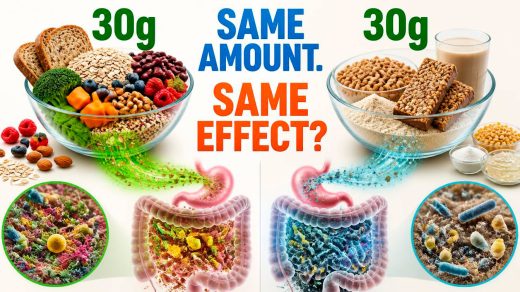
Compare two meals containing the same number of calories.
One requires substantial chewing, has an intact physical structure, and takes time to eat. The other is soft, energy-dense, and easy to consume quickly.
The calorie count may eventually be identical. The eating experience is not.
Food texture, structure, energy density, and eating rate can influence how quickly someone consumes energy before the body’s appetite signals have much opportunity to affect the meal.
That is one plausible explanation for the extra intake seen in the 2019 NIH experiment: participants consumed calories faster during the ultra-processed phase.
But even this mechanism shows why the UPF category is so difficult to generalize.
Soda, breakfast cereal, a protein bar, processed meat, and a frozen entrée do not have the same texture, energy density, or eating rate.
The category may capture several relevant characteristics without telling us which one matters most in a particular food.
Some of the problem may simply be familiar nutrition
There is also a less exotic explanation.
Many UPF-heavy diets contain large amounts of foods high in added sugars, sodium, refined carbohydrates, or saturated fat while providing less fiber and fewer minimally processed plant foods.
We already have good reasons to care about those characteristics.
Researchers often adjust UPF studies for diet quality and nutrient intake, and some associations remain. That suggests conventional nutrient composition may not explain everything.
But statistical adjustment cannot create two otherwise identical diets differing only in processing.
A 2023 analysis of U.S. cohorts, for example, estimated that nutritional characteristics accounted for part—but not all—of the relationship between UPF consumption and type 2 diabetes. Body weight also appeared to explain a substantial part of the association statistically.
So the claim that UPFs are harmful regardless of their nutritional composition goes beyond what the evidence can establish.
Additives are plausible suspects—not a universal explanation
Emulsifiers, nonnutritive sweeteners, preservatives, compounds created during processing, and chemicals associated with food packaging are all being investigated.
Some laboratory and animal studies provide legitimate reasons to study particular substances. Human observational research has raised additional questions about specific additives.
But the evidence has to remain specific.
A study of one emulsifier does not prove that all emulsifiers cause chronic disease. An effect on the microbiome in an animal does not automatically translate into disease in humans. And finding an additive in a UPF does not establish that the additive explains the health associations of the entire category.
These are important research questions.
They are not yet a single answer to the UPF puzzle.
What UPFs replace may matter just as much
There is another possibility that requires no mysterious harmful ingredient at all: displacement.
Every food takes the place of something else.
If soft drinks, packaged desserts, refined snacks, processed meats, and ready-to-eat meals provide a large share of someone’s calories, they may leave less room for fruits, vegetables, legumes, nuts, intact whole grains, and other foods associated with healthier dietary patterns.
That means the useful question is often not just:
“What happens when I eat this?”
It is:
“What am I eating instead?”
Replacing water with soda is one substitution. Replacing a candy bar with a high-fiber packaged cereal is another.
Both could change the percentage of ultra-processed food in the diet.
They clearly do not mean the same thing nutritionally.
The Biggest Complication: UPFs Don’t All Behave Alike
This may be the strongest reason not to use “ultra-processed” as a verdict on an individual food.
When researchers break the category apart, the associations change.
In the large U.S. diabetes study, sugar-sweetened and artificially sweetened beverages, refined breads, some animal-based products, sauces and condiments, and ready-to-eat mixed dishes were associated with higher type 2 diabetes risk.
But cereals, dark and whole-grain breads, and some other UPF subgroups were associated with lower risk in those cohorts.
Cardiovascular research has found a similar split. Sugar-sweetened and artificially sweetened beverages and processed meats were associated with higher cardiovascular risk, while categories including breads and cold cereals and yogurt/dairy desserts showed inverse associations.
These results do not prove that an ultra-processed cereal prevents disease or that a particular packaged yogurt protects the heart. They are observational subgroup findings, and people who choose different foods differ in many other ways.
But they do reveal a weakness in treating every UPF as biologically interchangeable.
A whole-grain packaged bread and a sugary drink may share a NOVA classification while differing dramatically in fiber, nutrients, liquid versus solid form, energy density, eating rate, and the foods they tend to replace.
That does not make NOVA useless.
It means evidence about a dietary category cannot automatically become a judgment about every food inside it.
Why Scientists Can’t Simply Run the Perfect Study
To settle the debate cleanly, researchers would need an almost impossible experiment.
Thousands of people would be randomly assigned to carefully controlled diets for years. Processing would change while calories, nutrients, texture, palatability, food structure, lifestyle, and everything else stayed comparable. Researchers would then wait for outcomes such as diabetes, cardiovascular disease, cancer, and mortality.
Real nutrition science rarely works that neatly.
Instead, researchers build the picture from different types of evidence.
Large prospective studies ask whether dietary patterns predict disease years later.
Controlled feeding trials test what happens when people actually eat different diets.
Mechanistic experiments explore specific biological pathways.
Subgroup analyses ask whether different UPFs show different associations.
Each answers a different question.
Each also has limitations.
Long-term observational studies can never completely rule out residual confounding—differences between groups that researchers failed to measure or could not measure accurately. Diet is particularly difficult because people forget what they ate, products change over time, and food questionnaires may not contain enough information to classify every item perfectly.
Those limitations are a reason to resist sweeping claims.
They are not a reason to ignore a pattern that appears repeatedly.
The evidence currently supports a middle position that is less dramatic but more useful:
UPF-heavy dietary patterns deserve concern. Exactly what makes them harmful—and whether every food carrying the label deserves equal concern—remains less certain.
So, Should You Try to Eliminate Ultra-Processed Foods?
The evidence does not require turning grocery shopping into a NOVA classification exercise.
For everyday decisions, processing is more useful when combined with information we already know matters.
Look at the whole diet. A diet dominated by sugary drinks, processed meats, sweets, refined snacks, and convenience foods is very different from a nutrient-rich diet that happens to include packaged whole-grain bread, breakfast cereal, or an occasional protein bar.
Look at the food itself. Fiber still matters. Whole grains still matter. Added sugars and sodium still matter. Protein and micronutrients still matter. So can energy density and whether calories arrive in liquid or solid form. A UPF label adds information; it does not erase everything else on the nutrition label.
Ask what the food replaces. A convenient packaged food that helps someone replace a less nutritious option is a different proposition from one that repeatedly displaces fruits, vegetables, legumes, or other nutrient-dense foods.
Pay attention to patterns that make overeating easy. Foods that are easy to consume rapidly, highly energy-dense, or difficult to stop eating may deserve attention regardless of the terminology used to classify them.
Keep convenience in perspective. Food has to fit into real lives. Packaged foods can be affordable, portable, safe, and practical for people with limited time, cooking facilities, mobility, or access to fresh food. Convenience is not itself a nutritional flaw.
There is also no scientifically established percentage of UPF intake at which a diet suddenly changes from safe to harmful.
That makes “eat zero UPFs” a much stronger prescription than current evidence supports.
The Better Question Isn’t “Processed or Not?”
Return to the kitchen counter.
The soda is still there.
So is the packaged whole-grain bread.
So is the protein bar.
Putting them in the same ultra-processed category tells us something about how they were formulated.
It does not tell us that they are nutritionally equivalent.
At the same time, the diversity of the category should not become an excuse to dismiss the larger signal. Diets high in ultra-processed foods are repeatedly associated with poorer health outcomes, and controlled experiments suggest that some UPF-heavy dietary patterns can encourage greater calorie intake and weight gain.
Something important is happening.
The science simply has not reduced it to one culprit.
For some foods, familiar nutritional problems such as added sugar, sodium, low fiber, or high energy density may explain much of the concern. For others, texture, eating rate, food structure, or other features of processing may matter. Specific additives remain active areas of research. And in many cases, what a UPF replaces may be as important as the food itself.
So “Is this ultra-processed?” can be a useful question.
It just should not be the last one.
A better set of questions is: What is actually in this food? How does it affect the overall quality of my diet? What does it tend to replace? And is it part of a pattern that makes nutritious food easier—or harder—to eat?
Ultra-processing is a useful signal.
It is not a biological verdict.