
Processing can tell you something important about a food. It just cannot tell you everything that matters about whether that food belongs in a healthy diet.
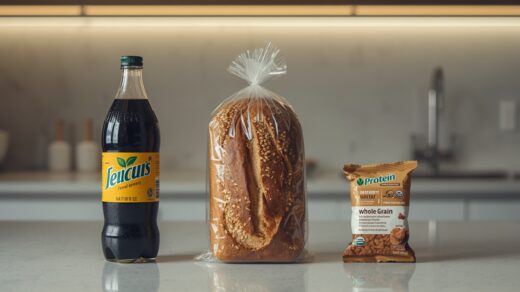
Put six foods on a kitchen counter: frozen broccoli, canned beans, whole-grain bread, a sugary breakfast cereal, plain packaged yogurt, and a homemade frosted cake.
Now try to rank them using one rule:
The less processed, the healthier.
The rule breaks almost immediately.
Freezing broccoli changes it, but does not turn it into nutritionally poor food. Canning beans makes them shelf-stable while preserving fiber and protein. Bread requires milling, mixing, baking, and often industrial production, yet a whole-grain loaf can still contribute useful fiber and nutrients.
Meanwhile, making cake from scratch does not make its added sugar and saturated fat disappear.
None of this means processing is irrelevant. Diets high in foods classified as ultra-processed have repeatedly been associated with poorer health outcomes, and a tightly controlled NIH feeding experiment found that people ate substantially more calories on an ultra-processed diet than on an unprocessed one.
The mistake is treating processing level as a complete nutritional diagnosis.
A better way to judge food is to keep four questions separate:
How was it processed? What nutrients does it provide? What happened to its physical structure? And how does it fit into the rest of the diet?
Those questions overlap. They are not interchangeable.
“Processed” Covers Almost Everything We Eat
Unless you are eating produce straight from the plant, much of your food has been processed somehow.
Washing, chopping, freezing, pasteurizing, fermenting, drying, milling, canning, cooking, baking, and packaging all count as forms of processing.
Some barely alter the food. Others transform it dramatically.
That is why nutrition researchers often use more specific systems such as NOVA, which categorizes foods according to the nature, extent, and purpose of processing. Its four groups range from unprocessed or minimally processed foods to ultra-processed foods—industrial formulations often made with combinations of ingredients and processes uncommon in home cooking.
NOVA captures something a nutrient label may miss: how the food was formulated and manufactured.
That can be useful.
But NOVA answers a different question from: Is this food nutritious?
Confusing those two questions is where much of the processed-food debate goes wrong.
Why Minimally Processed Foods Deserve Their Good Reputation
There is a reason sound nutrition advice repeatedly emphasizes vegetables, fruits, legumes, nuts, seeds, and whole grains.
These foods tend to deliver combinations of fiber, vitamins, minerals, unsaturated fats, protein, and other compounds in relatively intact food structures. Dietary patterns built heavily around such foods are consistently associated with better cardiovascular and metabolic health.
So “eat mostly minimally processed foods” is reasonable advice.
What does not follow is that minimal processing itself explains all of their value—or that processing automatically removes it.
Take beans.
Cook them, seal them in a can, and they remain beans. They still provide fiber, plant protein, and minerals. Some canned versions contain substantial sodium, so choosing lower-sodium products or draining and rinsing can be useful. But the can itself does not turn them into junk food.
The same is true of frozen produce. Freezing is processing, but it also makes fruits and vegetables available for months, reduces spoilage, and can preserve much of their nutritional value.
Major health organizations routinely include fresh, frozen, and canned produce in healthy eating guidance for exactly this reason.
“Processed” has already failed as a synonym for “unhealthy.”
Sometimes Processing Improves Food
Processing is often discussed as something that damages food.
It can also make food safer, more practical, or more nutritious.
Pasteurization reduces microbial hazards. Cooking makes many foods safer and easier to digest. Freezing and canning extend shelf life. Fermentation changes flavor, preservation, and chemical composition.
Fortification goes further.
Since the late 1990s, folic acid has been added to enriched cereal grain products in the United States. That public-health intervention increased folate intake and was followed by a substantial reduction in neural tube defects.
That does not mean fortification can transform any product into a nutritionally ideal food. A heavily sweetened cereal does not become equivalent to oatmeal because vitamins were added.
But it does destroy another simplistic rule: nutrients do not become nutritionally suspect merely because industrial processing put them there.
Processing can remove nutrients.
It can preserve them.
It can add them.
The outcome depends on what was done and what the finished food became.
Nutrient Quality Still Matters
Imagine two packaged breakfast foods produced in large factories.
One contains whole grains, several grams of fiber, and relatively little added sugar.
The other consists mostly of refined starch and added sugar with little fiber.
A processing system might place both in the same broad category.
Nutritionally, they are clearly not identical.
Fiber still matters. So do protein, added sugars, sodium, saturated fat, energy density, vitamins, minerals, and the type of carbohydrate or fat a food provides.
This becomes especially obvious when researchers split ultra-processed foods into subgroups.
In large U.S. prospective studies, greater overall ultra-processed food intake has been associated with higher type 2 diabetes and cardiovascular risk. Yet the associations have differed across food categories. Sweetened beverages, processed meats, and some ready-to-eat foods have tended to show less favorable relationships, while certain whole-grain breads, cereals, and yogurt-related categories have sometimes shown neutral or inverse associations.
Those subgroup findings are observational, so they do not prove that a particular packaged cereal prevents disease.
But they make one point difficult to ignore:
Foods that share a processing label can still differ substantially in nutritional quality and in how they relate to health.
And even nutrients are not the whole story.
Food Structure Changes How We Experience a Meal
An almond is not simply a package containing fat, protein, carbohydrate, and fiber.
Those nutrients are locked inside a physical structure.
The same is true of grains, fruit, beans, and other foods. Grinding, milling, juicing, pureeing, extrusion, and other forms of processing can change that structure.
Why does that matter?
Because structure influences how quickly food is chewed and swallowed, how rapidly digestive enzymes gain access to nutrients, how quickly carbohydrate becomes available for absorption, how much energy the body can access, and how filling the food may be.
A whole apple, applesauce, and apple juice may begin with the same fruit, but they do not present the digestive system with the same physical experience.
This is sometimes described as the food matrix.
And once again, the question becomes more useful when it changes from:
Was this food processed?
to:
What did the processing actually do to it?
Why the Ultra-Processed Food Evidence Still Matters
None of this complexity makes the concerns about ultra-processed diets disappear.
A 2024 umbrella review in The BMJ brought together 45 pooled analyses involving nearly 10 million participants. Higher ultra-processed food intake was associated with a range of unfavorable outcomes, including cardiometabolic disease and mortality, although the strength and certainty of evidence varied substantially and most of the underlying data were observational.
Then there is the unusually important experimental evidence.
In a randomized NIH inpatient study, 20 adults ate an ultra-processed diet for two weeks and an unprocessed diet for two weeks. The foods offered were designed to be comparable in calories, macronutrients, sugar, sodium, and fiber.
Participants were allowed to eat as much as they wanted.
On the ultra-processed diet, they consumed roughly 500 more calories per day and gained about two pounds. During the unprocessed phase, they lost roughly the same amount.
That is strong evidence that the two dietary patterns affected eating behavior differently under those conditions.
But notice what the trial did not prove.
It did not show that every individual ultra-processed food promotes overeating. It tested complete dietary patterns that differed in multiple characteristics beyond a category label.
Researchers have therefore continued investigating what may matter: energy density, texture, eating rate, food structure, palatability, beverages, nutrient composition, or combinations of these.
“Ultra-processed” captured an important distinction.
It did not reveal one universal mechanism.
The Category Is Too Big to Treat Every Food the Same
This may be the most important limitation of using processing level as a verdict on an individual product.
Ultra-processed food is not one food.
It includes soft drinks, packaged breads, breakfast cereals, processed meats, desserts, yogurts, snack foods, plant-based products, frozen meals, and many other formulations.
Large cohort studies increasingly show that those subgroups do not behave uniformly.
In a European study of more than 266,000 adults, higher total ultra-processed food intake was associated with a modestly greater risk of developing multiple chronic diseases. But much of the positive association appeared to be driven by particular subgroups, including sweetened beverages and some animal-based products. Ultra-processed breads and cereals did not show the same pattern.
Large U.S. cardiovascular studies have reported similar heterogeneity.
That does not invalidate the overall UPF signal.
It tells us that category-level evidence and food-level decisions are different tasks.
A classification can reveal something important about a dietary pattern without telling you everything you need to know about one loaf of bread.
Homemade Does Not Automatically Mean Healthy
Now reverse the example.
Bake cookies at home using flour, butter, sugar, and salt.
No industrial emulsifiers. No unfamiliar ingredients. No factory formulation.
They are still cookies.
Their homemade status does not erase their added sugar, saturated fat, energy density, or low fiber content.
Words such as homemade, natural, and minimally processed can create a health halo because they describe qualities people reasonably value—taste, tradition, ingredient control, cultural meaning, or enjoyment.
But they do not answer every nutritional question.
A homemade dessert can absolutely fit into a healthy diet.
It does not need to become a health food to belong there.
Packaged Foods Can Solve Real Nutritional Problems
People do not eat inside controlled research kitchens.
They have jobs, school, caregiving responsibilities, limited budgets, transportation constraints, small kitchens, disabilities, and nights when dinner needs to happen quickly.
Canned beans can remain in the pantry for months.
Frozen vegetables do not wilt because plans changed.
Whole-grain bread can turn eggs, nut butter, or hummus into a meal.
Plain yogurt requires no preparation.
Those advantages are not separate from nutrition. They help determine whether nutritious foods are affordable, available, and actually eaten.
The important details still matter. A canned vegetable may contain a lot of sodium. Frozen vegetables may come in a salty sauce. Fruit can be packed in syrup. A yogurt can be plain or loaded with added sugar.
The package is not the nutritional verdict.
The food inside it still needs to be judged as food.
What About Additives?
Additives are often where concern about processing turns into fear of “chemicals.”
But food additive is another enormous category.
Preservatives can slow spoilage. Emulsifiers keep ingredients mixed. Stabilizers change texture. Colors affect appearance. Sweeteners affect sweetness. Fortificants supply nutrients.
Their effects cannot reasonably be inferred from the fact that all of them are additives.
Specific substances and additive classes are legitimate areas of research, including questions about metabolism, the gut microbiome, and long-term exposure.
But an unfamiliar ingredient name does not itself establish harm.
The scientifically useful question is always more specific:
Which substance, at what exposure, in which people, and with what demonstrated outcome?
What a Food Replaces Can Change the Answer
One of the most useful questions in nutrition is also one of the easiest to forget:
Compared with what?
Packaged whole-grain bread may look inferior if the comparison is freshly cooked intact grains.
But what if it replaces a refined pastry every morning?
Canned beans may appear less ideal than beans cooked from dry.
But what if they replace processed meat several nights a week?
A protein bar may add little to the diet of someone who has easy access to a balanced meal. For someone who would otherwise go many hours without eating, its practical role is different.
Nutrition is full of these substitutions.
Foods rarely enter the diet without changing something else. They replace another food, replace a missed meal, or add extra energy on top of what was already there.
That is why “Is this food healthy?” often has no useful answer until we also ask:
What job is it doing in the diet?
Processing Can Affect How Easy Food Is to Overeat
There is one more reason processing deserves attention even when the nutrient label looks respectable.
Processing can change how a food is eaten.
Some foods become softer, easier to chew, faster to consume, more energy-dense, or easier to eat in large amounts. Liquid calories can behave differently from intact solid foods. Refining and restructuring can make nutrients more readily accessible.
Eating rate is particularly interesting because faster eating can allow more calories to be consumed before signals that help end a meal have fully influenced behavior.
These features are plausible contributors to the higher energy intake seen in controlled ultra-processed diet experiments.
But they are not exclusive to ultra-processed foods.
Yogurt is soft. Nut butter is energy-dense. Soup can be consumed quickly. A ripe banana requires little chewing.
So once again, the label is only the beginning.
The better question is:
Which characteristics of this food make it easier—or harder—to eat in a way that supports the rest of the diet?
So Should Processing Influence What You Buy?
Yes.
It just should not be the only thing you look at.
A practical approach is to build most meals around nutrient-rich foods—vegetables, fruits, legumes, whole grains, nuts, seeds, and other foods with strong evidence behind them—while judging packaged foods by what they actually contribute.
Processing deserves more attention when it substantially changes a food’s structure, adds large amounts of sugar or sodium, creates a very energy-dense formulation, or produces a product that is exceptionally easy to consume in excess.
At the same time, conventional nutritional information still counts.
So do convenience, cost, shelf life, and whether the food helps someone maintain a healthy eating pattern in real life.
That means frozen vegetables, canned beans, packaged whole-grain bread, plain yogurt, and fortified foods do not need an exemption from healthy eating simply because someone processed them.
Nor does a homemade dessert earn special nutritional status because nobody manufactured it in a factory.
A Better Way to Judge Food
Instead of looking for one label that tells you whether a food is healthy, ask a few different questions.
What is it mainly made from? What does it provide—fiber, protein, unsaturated fat, vitamins, minerals, added sugars, sodium? What did processing change about its structure or composition? Does the food make it unusually easy to consume a lot of energy quickly? How often does it appear in your diet? And what does it tend to replace?
No single answer settles the question.
That is not a flaw in nutrition science.
It is a reflection of what eating actually is: a pattern of foods with different nutrients, structures, purposes, and trade-offs.
“Minimally Processed” Is a Useful Clue, Not a Definition of Healthy
Return to the kitchen counter.
The broccoli was frozen.
The beans were canned.
The bread was milled, mixed, baked, and packaged.
The yogurt was cultured and refrigerated.
The cereal may be heavily formulated.
The cake was made from scratch.
Processing tells you something about every one of them.
It does not finish the evaluation.
The evidence linking diets high in ultra-processed foods with poorer health deserves serious attention. So does experimental evidence showing that certain ultra-processed dietary patterns can encourage greater calorie intake.
But those findings do not require pretending that every processed food has the same nutritional meaning.
Processing level provides one layer of information. Nutrient quality provides another. Food structure adds another. And the overall dietary pattern tells you how those pieces fit together.
Healthy diets will usually contain plenty of foods that remain relatively close to their original form.
They do not need to contain only those foods.
Healthy eating is not a contest to find the food that has been altered the least. It is about choosing foods—and combinations of foods—that support health in the life you actually live.