
Living longer matters. But lifespan alone cannot tell us whether those extra years include mobility, independence, connection, and the ability to keep doing what matters.
Imagine two people celebrating their 90th birthday.
One still walks around the neighborhood, prepares meals, follows conversations, manages everyday responsibilities, sees people they care about, and has reasons to look forward to the week.
The other reached exactly the same age, but the previous decade looked very different. Stairs became difficult. Hearing problems made conversations harder. Getting around required help. More and more ordinary decisions depended on someone else.
Their lifespans are identical.
Their experience of aging is not.
That exposes a blind spot in the way we often talk about longevity. Age at death is wonderfully clear: 80 years, 90 years, 100 years. But it tells us only how long someone lived, not what those years allowed them to do.
Living longer still matters enormously. Falling mortality and longer life expectancy are major achievements of medicine and public health. But if the question is whether people are aging well, survival cannot be the only outcome.
The popular term healthspan tries to capture this distinction. Yet an even more useful question sits underneath it:
What can a person still do—and what kind of life can they still live—as they grow older?
That question makes healthy aging much harder to squeeze into a single number.
Lifespan Measures Something Important—and Leaves Out Almost Everything in Between
Lifespan has one enormous scientific advantage: the endpoint is unambiguous.
Researchers can measure life expectancy, compare mortality across populations, track changes over decades, and determine whether people are surviving diseases that once killed them earlier.
But mortality compresses everything between birth and death into one outcome.
Two populations can have similar life expectancy while differing in disability, chronic disease, mobility, cognitive health, or quality of life. And longer survival does not necessarily tell us whether the additional years are spent in good health.
That is why researchers also use measures such as healthy life expectancy and disability-free life expectancy. These attempt to describe not just how many years people live, but how much health or function those years contain.
Healthspan sounds like a neat way to summarize the same idea.
In practice, it is much messier.
“Healthspan” Is Not One Standardized Measurement
Healthspan is generally understood as the period of life spent in good health.
But when, exactly, does “good health” end?
Is it when someone develops high blood pressure?
When arthritis begins limiting movement?
When they need help shopping?
When memory declines?
When they rate their own health as poor?
A 2025 systematic review examining 207 records that used the concept of healthspan found substantial variation in how researchers defined and measured it. Definitions included freedom from chronic disease, disability, and performance limitations, while relatively few incorporated subjective outcomes such as quality of life.
That does not make healthspan meaningless. It means the term is better understood as a useful concept than as one universally standardized personal score.
So when a headline claims that a behavior, drug, or supplement can add years of “healthspan,” there is a question worth asking before being impressed by the number:
How was healthspan actually measured?
The answer may be very different from what the word suggests.
You Can Have a Chronic Disease and Still Age Well
Defining healthy aging as “living without disease” creates another problem.
A diagnosis does not tell you how a person lives.
Someone with well-managed hypertension or arthritis may remain active, independent, socially connected, and capable of doing what matters to them. Meanwhile, someone with relatively few diagnoses may struggle with balance, strength, hearing, mobility, or the complicated tasks required for independent living.
Disease burden matters, sometimes profoundly. But it is not interchangeable with function.
That distinction is central to the World Health Organization’s healthy-aging framework. WHO does not define healthy aging as reaching old age without medical conditions. Instead, it focuses on maintaining functional ability—the capabilities that allow people to be and do what they value.
That moves the question away from How many diagnoses do you have?
Toward something much more concrete:
What does your health still allow you to do?
Function Makes Healthy Aging Personal
Function can sound like clinical jargon until you picture a staircase.
Two people may have the same knee problem. One lives in a single-level home near stores and public transportation. The other must climb several flights of stairs just to leave home.
Their bodies may have similar limitations.
Their lives may not.
Add a railing, elevator, mobility aid, better transportation, or a more accessible home, and the underlying knee condition may not change at all. Yet what the person can do can change dramatically.
WHO captures this distinction by separating intrinsic capacity—a person’s combined physical and mental capacities—from functional ability, which emerges from the interaction between those capacities and the surrounding environment.
That is a surprisingly important idea.
Healthy aging is not simply something happening inside your cells, muscles, or organs. It also depends on whether the world around you allows the capacities you have to remain useful.
Mobility Is Really About Access to Life
Walking seems ordinary until it becomes difficult.
Then walking determines whether you can cross a street, shop for groceries, visit a friend, use transportation, leave home comfortably, or return to your normal routine after an illness.
That is one reason simple measures such as walking speed have attracted so much attention in aging research.
An influential pooled analysis of nine cohort studies involving more than 34,000 community-dwelling adults age 65 and older found that faster usual walking speed was consistently associated with better survival.
But this finding is easy to misuse.
Walking speed is not a countdown clock. The research does not mean that making someone walk a certain amount faster automatically adds a corresponding number of years to life.
Instead, walking is informative partly because it requires many systems to cooperate: muscles, balance, cardiovascular capacity, vision, coordination, and the nervous system. When walking becomes difficult, it can reveal something about overall capacity that a list of diagnoses may miss.
The point is not that everyone needs to become a fast walker.
It is that mobility preserves options.
Strength Matters for the Same Reason
The longevity conversation often focuses on muscle mass. But having muscle and being able to use it effectively are not the same thing.
Everyday life requires strength.
Getting out of a low chair requires it. So does carrying groceries, climbing stairs, recovering your balance, or rebuilding function after a period of illness or inactivity.
Muscle mass and strength can both decline with age, but they do not necessarily change at the same rate. That is why modern approaches to muscle health increasingly consider strength and physical performance alongside muscle quantity.
For healthy aging, the practical question is not simply How much muscle do I have?
It is:
Do I have enough physical reserve for what my life asks me to do?
Regular physical activity can help preserve that reserve. US physical-activity guidance for older adults from the CDC combines aerobic activity with muscle-strengthening and balance activities because these capacities contribute differently to health and function.
Exercise cannot guarantee freedom from disability. But preserving physical capacity gives the body more room to handle everyday demands—and potentially more reserve when life becomes physically challenging.
Function Isn’t Only Physical
Imagine being perfectly capable of walking to the pharmacy but unable to remember which medication to take.
Or strong enough to travel independently but unable to navigate an unfamiliar route.
Healthy aging also depends on cognitive and sensory abilities that are easy to overlook until they begin interfering with daily life.
Memory, attention, judgment, and processing speed help people manage finances, make decisions, follow instructions, communicate, plan, and respond when something unexpected happens.
Some changes in memory and thinking can occur with normal aging and do not automatically indicate dementia. The more useful functional question is whether cognitive capacity remains sufficient—or can be supported well enough—for the person to manage the parts of life that matter to them.
Hearing and vision deserve the same attention.
Hearing loss can turn a lively restaurant into a place where following conversation becomes exhausting. Vision affects reading, driving, navigation, recognizing hazards, and countless everyday tasks.
And once again, biology is only part of the story.
Glasses can improve function without making the eye biologically younger. Hearing aids can change someone’s ability to participate in conversation. Better lighting can make a home safer to navigate.
Healthy aging is partly about preserving capacity.
It is also about supporting the capacity that remains.
Independence Doesn’t Mean Never Needing Help
This is where the ideal of “independent aging” can become misleading.
If independence means doing absolutely everything without assistance, then a cane, hearing aid, home modification, transportation service, or help managing one difficult task could look like failure.
That is not a particularly useful definition.
Someone who uses a cane to walk to a favorite café still made the trip. Someone who uses hearing aids to stay involved in family conversations has not become less successful at aging because technology helped make the conversation possible.
Support can preserve autonomy rather than eliminate it.
A better way to think about independence is having enough capacity, choice, assistance, and environmental support to continue living in ways that matter to you.
That also avoids turning disability into a judgment about the value or success of someone’s life.
Needing help and having a meaningful, self-directed life are not opposites.
Function Still Doesn’t Tell Us What Life Feels Like
Now imagine two older adults who perform almost identically on tests of strength, mobility, memory, and everyday tasks.
One feels connected to other people, enjoys daily routines, has manageable pain, feels secure at home, and has activities that provide purpose.
The other does not.
Function alone cannot fully explain that difference.
That is where quality of life becomes essential.
Research asking older adults themselves what matters has repeatedly found that quality of life extends beyond physical health. Autonomy, relationships, meaningful roles and activities, emotional well-being, financial security, home and neighborhood, adaptation, and other aspects of life can all matter.
These subjective outcomes are not somehow less legitimate because they cannot be read from a blood test.
They answer a different question.
Function asks:
What can you do?
Quality of life asks:
What is living this life actually like?
Those questions overlap, but neither can replace the other.
And importantly, physical limitation does not automatically mean poor quality of life. People adapt. Priorities change. Environments can compensate. Someone can live with disability or chronic disease and still experience connection, autonomy, purpose, and satisfaction.
Are Longer Lives Just Creating More Years of Poor Health?
This is the uncomfortable question behind much of the healthspan debate.
Suppose average life expectancy increases by five years.
Where did those years go?
One possibility is compression of morbidity: serious illness and disability occur later, so people spend a greater proportion of life in relatively good health.
Another is expansion of morbidity: people survive longer but spend more years living with disease or disability.
Reality is more complicated than either slogan.
Patterns differ depending on the population, time period, health system, socioeconomic conditions, and—crucially—what researchers decide to measure.
Disease and disability are not even interchangeable here. People may live longer with diagnosed chronic conditions while severe functional limitations are delayed because those conditions are better treated or managed.
So “we are living longer” does not prove that we are aging better.
But “longer life just means more sick years” is not justified either.
To know what additional years contain, we have to measure them.
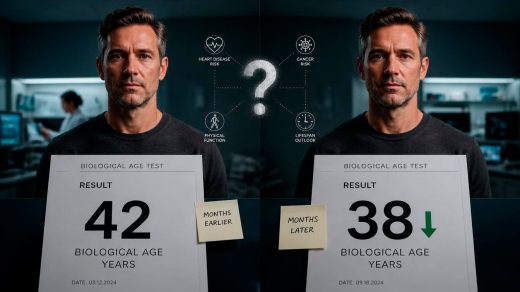
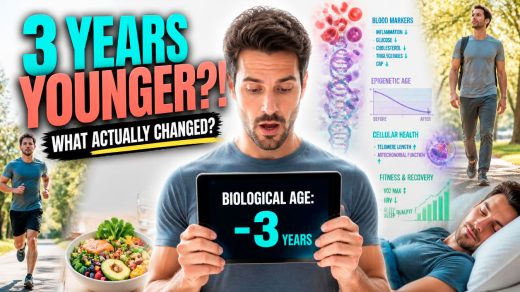
Why a “Biological Age” Number Can’t Settle the Question
The longevity industry offers a seductive alternative to all this complexity: perhaps a biomarker can simply tell us how well someone is aging.
Biological-aging clocks and other biomarkers are legitimate areas of research. Some measurements can capture patterns associated with chronological age, disease risk, or future health outcomes.
But consider everything a meaningful definition of healthy aging would need to encompass.
Can you move where you need to go?
Can you make decisions and manage daily responsibilities?
Can you communicate?
Can you maintain relationships?
Can you participate in activities that matter?
Does your environment support you when your abilities change?
How do you experience your life?
No single molecular number currently captures all of that.
A biomarker can be scientifically useful without being a complete measure of a person. It may predict one layer of aging while mobility, cognition, function, autonomy, and quality of life describe others.
The mistake is not measuring biology.
It is expecting one measurement to stand in for the entire aging experience.
Healthy Aging Is Shaped by More Than Personal Choices
Once function becomes the goal, another misconception appears: if someone loses function, they must have made the wrong choices.
Aging is not that simple.
Long-term capacity reflects many interacting influences—physical activity, chronic disease, injuries, cognition, sensory health, nutrition, medications, medical care, relationships, socioeconomic circumstances, housing, transportation, and the physical environment, among others.
Those influences accumulate across decades.
That matters because healthy-aging advice can otherwise become deceptively individualistic.
Exercise matters. Nutrition matters. Managing health conditions matters.
But so can having a safe place to walk, affordable health care, accessible housing, reliable transportation, financial security, and support when assistance becomes necessary.
An environment can turn a modest limitation into a major disability—or help prevent that limitation from shrinking someone’s life.
Healthy aging is therefore partly about preserving what the body can do.
It is also about preventing changes in capacity from automatically becoming losses of autonomy and participation.
Does Lifestyle Really Extend “Healthspan”?
This is where a useful concept can easily become a marketing promise.
There is strong evidence that established health behaviors can improve outcomes that matter for aging. Physical activity, for example, is associated with lower risk of several chronic diseases and can support cardiovascular fitness, strength, balance, mobility, and physical function. Avoiding tobacco, eating a nutritious diet, getting appropriate preventive care, and managing established health risks also matter.
But there is an important distinction between two claims:
A behavior improves health or helps preserve function.
And:
A behavior slows the underlying biological process of aging.
Those are not automatically the same statement.
Fortunately, they do not need to be.
Exercise does not have to make your cells “younger” to make preserved strength or mobility valuable. A treatment does not have to reverse biological age to help someone maintain independence.
Sometimes the obsession with proving that something “slows aging” distracts from benefits that are both better established and more meaningful.
Healthy Aging Is Not the Same as Staying Young
There is another problem with the idea of “successful aging”: successful compared with what?
If youth is the benchmark, aging itself becomes failure.
That is neither realistic nor useful.
Aging brings change. Some physical and sensory capacities decline. Recovery may become slower. Chronic conditions become more common.
Healthy aging does not require pretending those changes are not happening.
The goal is to preserve enough physical, cognitive, sensory, and social capacity—and enough environmental support—to continue doing what matters as circumstances change.
That is fundamentally different from “anti-aging.”
Anti-aging asks how to stop becoming older.
Healthy aging asks how to support health, function, autonomy, and well-being while becoming older.
The second question is much more useful.
So What Should We Measure?
There probably isn’t one perfect number that can replace lifespan.
That may be the most important lesson.
To understand whether longer lives are also better-functioning lives, we need several complementary measures:
- Survival tells us whether people are living longer.
- Disease burden tells us how much illness those years contain.
- Physical capacity tells us whether the body can meet everyday demands.
- Cognitive and sensory function tells us whether people can think, communicate, navigate, and interact with their surroundings.
- Functional ability and autonomy tell us whether people can live in ways they value, including with appropriate support.
- Participation tells us whether people remain involved in relationships, communities, responsibilities, and meaningful activities.
- Quality of life tells us something the other measures cannot fully infer: how life is experienced by the person living it.
Each reveals something the others miss.
That is also why replacing lifespan with a single “healthspan” score may simply create a new version of the old problem.
Healthy aging is genuinely multidimensional.
Our measurements should be too.
A Better Question Than “How Long Can I Live?”
Once you see longevity this way, the personal question changes.
Instead of asking only how many years might be added to your life, ask what you would want those years to contain.
What activities would you want to remain capable of doing?
Which physical, cognitive, and sensory abilities make those activities possible?
Which health risks can realistically be reduced?
And if some abilities change, what support—from your home, community, technology, transportation, health care, or relationships—could help preserve autonomy and participation?
These questions cannot calculate how long you will live.
They do something more practical: they turn healthy aging from a race against the calendar into a question about preserving the capabilities that make life usable and meaningful.
And that process begins long before old age. Later-life function reflects health, opportunities, environments, and circumstances accumulated across decades.
More Years Matter. What Those Years Contain Matters Too.
Return to the two people celebrating their 90th birthday.
The fact that both reached 90 matters. Lifespan is not an outdated metric simply because it cannot describe everything that happened along the way.
But age alone cannot tell us whether they aged similarly.
For that, we need to know more.
Could they move where they wanted to go? Think, hear, see, and communicate well enough for everyday life? Make meaningful choices? Maintain relationships? Participate in activities they valued? Did their surroundings support them when their abilities changed? And how did they experience those years themselves?
None of these questions determines the value of a person’s life. They tell us something different: what medicine, public health, communities, and individuals might try to preserve when the goal extends beyond survival alone.
So lifespan and function are not competing measures.
Lifespan tells us how many years there were. Function, autonomy, participation, and quality of life help tell us what those years contained.
If the goal is healthy aging, we need both.