Living longer matters. But the more useful question is what you want to remain able to do with those years.
Imagine being offered ten additional years of life.
Before saying yes, you might want to know what those years look like.
Can you still climb the stairs to your bedroom? Carry groceries? Follow a conversation in a noisy restaurant? Make your own decisions? Travel, cook, garden, meet friends, play with grandchildren—or simply get where you want to go without depending entirely on someone else?
Suddenly, the number of years is only part of the answer.
This is the distinction that often gets lost in the modern longevity conversation. We have become increasingly good at measuring aging: biomarkers, biological-age clocks, fitness scores, blood tests, wearable data. But the metric that may matter most is far less futuristic.
What can you still do?
In aging research, that idea is captured by function: having enough physical and mental capacity, together with the right environment and support, to keep doing the things that matter to you.
That shifts the goal from staying young to something both more realistic and more meaningful: staying capable.
Aging Well Doesn’t Mean Avoiding Every Disease
The World Health Organization defines healthy aging around functional ability—the ability to be and do what a person has reason to value.
That includes moving around, making decisions, maintaining relationships, learning, meeting basic needs, and participating in society.
Importantly, WHO does not define healthy aging as being disease-free.
That distinction matters.
Someone can live with hypertension, arthritis, hearing loss, or diabetes and still travel, maintain relationships, live independently, volunteer, work, and enjoy daily life. Another person may have relatively favorable laboratory results but struggle to walk several blocks, hear a conversation, or manage everyday responsibilities.
A medical history tells us something important about aging. It does not tell us how fully someone can participate in life.
The same is true of lifespan, which simply describes how long someone lives. Healthspan is commonly used to describe years spent in relatively good health, although researchers do not use one universal definition. Quality of life adds the person’s own experience of life.
Function brings these ideas down to earth.
Can you do what matters to you?
The Abilities That Keep Life Open
The World Health Organization uses the term intrinsic capacity for the collection of physical and mental abilities a person can draw on—including movement, thinking, vision, hearing, and memory.
The terminology sounds technical. The reality is ordinary.
Can you get out of a chair? Recover your balance when you stumble? Walk far enough to shop or visit a friend? Hear what someone is saying? Remember what you need to do? Solve a problem when plans change?
These abilities determine how many options remain available in daily life.
Mobility is about more than exercise
Strength, balance, mobility, and cardiovascular fitness matter with age partly because they help preserve independence.
One of the clearest examples comes from the LIFE randomized clinical trial, which included 1,635 sedentary adults ages 70 to 89 who were already at risk for mobility disability.
Participants were assigned either to a structured physical-activity program or a health-education program. The physical-activity group was less likely to develop major mobility disability, defined as losing the ability to walk 400 meters independently.
That outcome is not as glamorous as reversing a biological-age score.
But being able to walk roughly a quarter mile can determine whether someone can shop, attend appointments, visit friends, or move through the community without substantial assistance.
A 2023 meta-analysis covering 105 studies and more than 7,700 older adults likewise found that exercise interventions improved physical function.
No single measurement—grip strength, walking speed, muscle mass, or aerobic fitness—captures aging on its own.
The point is not to win a particular test.
It is to preserve enough physical capacity to keep your options open.
Cognitive health is more than memory
The same principle applies to the brain.
Some cognitive abilities can change with normal aging. Processing may become slower, and learning unfamiliar information may require more effort. That is different from progressive neurological disease.
And cognition itself involves far more than remembering names.
Attention helps you navigate traffic and follow instructions. Executive function helps you plan, manage finances, organize medications, and solve problems. Language keeps communication possible. Reasoning helps you adapt when life stops going according to plan.
The National Institute on Aging notes that cognitive health in later life is influenced by many factors, including physical health, cardiovascular risk, sensory function, sleep, activity, and social engagement.
There is no single behavior that guarantees dementia prevention.
That is an important boundary. Exercise, cardiovascular care, and attention to hearing and other health issues may support brain health or reduce risk. They are not promises about an individual’s future.
Independence also depends on the world around you
There is another reason function cannot be measured entirely inside the body.
Imagine someone whose balance has become slightly less reliable, vision has worsened, and leg strength has declined.
In a one-story home with good lighting, handrails, nearby transportation, and reliable support, those changes may be manageable.
Put the same person at the top of three poorly lit flights of stairs, far from transportation, and the consequences could be very different.
That is why WHO treats a person’s environment as part of healthy aging.
Functional ability emerges from the interaction between what a person can do and what their surroundings allow them to do.
Sometimes preserving independence means improving capacity. Sometimes it means changing the environment.
Often, it means both.
Why Function Can Reveal What a Diagnosis Cannot
Consider two people with knee arthritis.
One still walks several miles, climbs stairs, and modifies activities when the knee hurts.
The other has become less active, lost leg strength, worries about falling, and now finds grocery shopping difficult.
Same diagnosis. Very different lives.
One useful way to understand the difference is reserve: the gap between the capacity you have and the capacity everyday life demands.
If standing up from a chair requires only a small fraction of your available strength, losing a little strength may barely register.
If standing already requires nearly everything you have, the same decline can suddenly threaten independence.
This helps explain why aging often feels less like one dramatic loss and more like several small changes beginning to interact.
Slightly poorer balance may be manageable. So may weaker legs or worse vision. Combine all three with an illness and a difficult home environment, and the effect can be much larger than any one problem suggests.
Reserve also matters when something goes wrong.
Two people may survive the same hospitalization yet recover very differently. One returns quickly to normal activity. Another loses strength during illness and never fully regains the previous level of function.
Aging well, then, is not simply about avoiding every setback.
It is also about maintaining enough capacity—and enough support—to absorb the setbacks that cannot be avoided.
What Can You Actually Influence?
This is where healthy-aging advice often goes wrong.
At one extreme is the promise that enough optimization can engineer an ideal old age. At the other is the idea that aging is inevitable, so individual choices barely matter.
The evidence supports neither.
Genes, illness, injuries, income, environment, healthcare access, occupational exposures, and decades of accumulated advantage and disadvantage all influence how people age.
But some actions can meaningfully improve the odds of preserving important abilities.
Physical activity has unusually direct evidence
If the goal is function rather than eternal youth, physical activity stands out.
Aerobic exercise challenges the cardiovascular system. Resistance exercise helps preserve strength. Balance-oriented activity improves stability. Regular movement helps maintain the ability to perform physical tasks.
Current U.S. physical-activity guidance recommends that older adults, when able, work toward 150 to 300 minutes of moderate aerobic activity or 75 to 150 minutes of vigorous activity each week, plus muscle-strengthening activity on at least two days. Multicomponent activity that includes balance is also recommended.
Those are public-health targets, not a pass-fail test for aging well. People starting from little activity can benefit before reaching the full recommendation, and exercise may need to be adapted to individual abilities.
What makes movement especially important is that evidence goes beyond simply observing that active people tend to age better.
Randomized trials show that structured activity can improve physical function and reduce mobility disability in older adults at risk. Exercise programs that challenge balance and functional ability have also been shown to reduce falls among community-dwelling older adults.
Exercise does not stop aging.
But aging does not erase the body’s ability to respond to exercise.
That is a much more useful fact.
Protecting the heart can also protect function
Cardiovascular and metabolic health matter beyond heart attacks.
High blood pressure, diabetes, smoking, abnormal cholesterol, and physical inactivity are among the factors associated with later cardiovascular and cognitive risk.
The 2024 Lancet Commission on dementia prevention identified several potentially modifiable factors associated with dementia risk, including hypertension, high LDL cholesterol, diabetes, smoking, physical inactivity, hearing loss, and untreated vision loss.
“Potentially modifiable” does not mean eliminating those factors guarantees dementia prevention. These are population-level risk estimates, and many risk factors overlap.
Intervention evidence offers a good example of why precision matters.
In SPRINT MIND, more than 9,300 adults with hypertension were randomly assigned to different blood-pressure treatment targets. Intensive blood-pressure treatment did not significantly reduce the trial’s primary outcome of probable dementia, but it did reduce mild cognitive impairment and the combined outcome of mild cognitive impairment or probable dementia.
The sensible takeaway is not that blood-pressure treatment prevents dementia.
It is that vascular and brain health are connected—and that treating established cardiovascular risks remains important for reasons already supported by strong evidence.
Nutrition supports aging; it doesn’t stop it
Longevity culture has a recurring appetite for the perfect diet, supplement, fasting schedule, or macronutrient ratio.
The evidence is less dramatic.
Older adults still need adequate energy and nutrients to support muscle, bone, immune function, and general health. Protein can become especially relevant when maintaining muscle is the goal, although more is not automatically better and the effects of supplementation depend on factors such as baseline intake, health, and exercise.
Healthy dietary patterns can support cardiovascular and metabolic health. But no dietary pattern has been shown to freeze biological aging or guarantee preserved function.
A better way to think about nutrition is as support for the systems you want to keep working.
It is less exciting than an anti-aging formula.
It is also more useful.
Hearing and vision are part of healthy aging too
Some losses are easy to dismiss until they begin shrinking daily life.
Hearing is a good example.
Difficulty hearing can affect conversation, social participation, safety, and the mental effort required to follow what is happening around you.
The ACHIEVE randomized trial tested whether treating hearing loss could slow cognitive decline in older adults. Across the entire study population, hearing intervention did not significantly reduce three-year cognitive decline. In a prespecified group at higher risk of cognitive decline, however, the intervention appeared beneficial.
That does not mean hearing aids prevent dementia.
Their most direct benefit is simpler: helping people hear and communicate. Secondary research from ACHIEVE also found improvements in aspects of health-related quality of life.
Vision has similarly obvious consequences for reading, navigation, driving, communication, and daily tasks.
This is an important feature of function-focused aging: an intervention does not need to extend life to matter.
Helping someone remain engaged in the life they already have is a meaningful outcome in itself.
Are We Measuring the Wrong Things?
Longevity culture loves numbers.
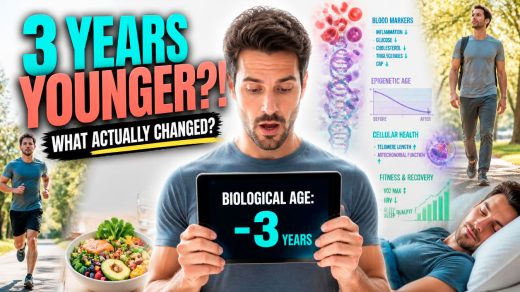
A watch can calculate recovery. A laboratory can produce dozens of biomarkers. A biological-age service may tell you that your body is several years “younger” or “older” than your birth certificate suggests.
Numbers make aging feel measurable—and perhaps controllable.
But what is easiest to quantify is not necessarily what matters most.
Consider biological-age clocks.
These algorithms use patterns in DNA methylation, proteins, blood markers, metabolites, imaging, or other data to estimate aspects of aging that chronological age does not capture. Some can predict mortality or age-related disease risk in particular datasets.
That makes them scientifically interesting.
It does not automatically make them reliable personal scorecards for how well someone is aging.
A 2025 perspective in npj Aging highlighted a basic challenge: different clocks are built from different biological inputs and trained toward different outcomes, producing different versions of “biological age.” The authors also noted that aging clocks have not yet demonstrated the consistency needed to serve reliably as surrogate endpoints across intervention trials.
The distinction is crucial.
A biomarker may predict something important without being the thing that matters.
If an intervention makes a biological-age clock read three years younger, we still need to know whether people actually experience less disability, better cognition, fewer diseases, greater independence, or longer lives.
Changing the predictor does not automatically mean changing the outcome it predicts.
That is why a question as simple as “Can you still walk 400 meters independently?” can sometimes be more meaningful than an impressive-looking biological score.
One is a proxy for something we hope matters.
The other already matters.
Aging Well Isn’t Entirely Up to You
There is a danger in turning healthy aging into another optimization project.
If exercise, nutrition, blood pressure, hearing, sleep, and social connection matter, it is easy to imply that people who make all the “right” choices should earn a healthy old age.
Biology makes no such promise.
WHO’s framework explicitly recognizes that functional ability depends partly on environment. Housing, transportation, healthcare, social support, community design, and financial resources can determine whether a limitation remains manageable or becomes disabling.
A lifetime of circumstances matters too.
People differ in education, income, occupational hazards, healthcare access, pollution exposure, neighborhood safety, chronic stress, and opportunities for nutritious food and physical activity.
And chance remains part of the equation.
People can develop serious illness despite doing many things associated with lower risk. Others remain highly functional despite substantial medical histories.
Recognizing that does not make prevention pointless. It makes the goal more realistic.
Healthy aging is not proof that someone made perfect choices, and disability is not evidence that someone aged incorrectly.
Sometimes aging well means maintaining capacity.
Sometimes it means rebuilding after illness.
And sometimes it means changing the environment or using assistance so that a loss of capacity does not become a loss of participation.
A Better Question Than “How Do I Stay Young?”
“Staying young” sounds appealing because it bundles many hopes into two words.
But what do you actually want to preserve?
Maybe it is traveling.
Making your own decisions.
Getting off the floor after playing with a child.
Living in your own home.
Hearing your friends at dinner.
Walking through the neighborhood.
Having enough energy to participate in the things that make a week feel worthwhile.
Once the goal becomes specific, healthy aging becomes easier to think about.
Protect capacity. Strength, balance, mobility, aerobic fitness, cognition, hearing, and vision all help preserve options.
Pay attention to trajectory. A small shift in a biological-age score may be difficult to interpret. Repeatedly struggling with stairs that used to feel easy is more concrete.
Treat established risks. Appropriate preventive care and management of cardiovascular, metabolic, sensory, and other health problems can protect health and function even when they cannot guarantee a particular aging trajectory.
Use support rather than treating it as failure. Glasses can restore usable vision. A hearing aid can make conversation easier. A railing can make stairs safer. A mobility aid may expand someone’s world rather than shrink it.
Support is not the opposite of healthy aging.
Sometimes support is what makes functional ability possible.
The Goal Isn’t to Stay Young Forever
Return to the original offer: ten more years.
What would make you want them?
Perhaps the answer is not that your cells test younger than your chronological age.
Perhaps it is that you can still get where you want to go. Understand the people you love. Make decisions. Adapt when circumstances change. Stay connected. Keep participating in your own life.
Aging changes physical and mental capacity, but those changes are neither perfectly predictable nor entirely fixed. Some abilities can be trained. Some risks can be treated. Some losses can be compensated for. Environments can be adapted.
That is a less dramatic vision of longevity than defeating aging.
It is also a more useful one.
The goal is not perfect youthfulness, total independence, or a life untouched by disease.
Aging well means preserving—and, when necessary, adapting—the capacities that allow you to keep living a life that matters to you.